Live Maine Lobster
Boasting a unique, naturally sweet taste, Maine lobsters are among the great pleasures of the New England table. This complete guide covers choosing, sizing and handling live Maine lobster like a wharf regular.
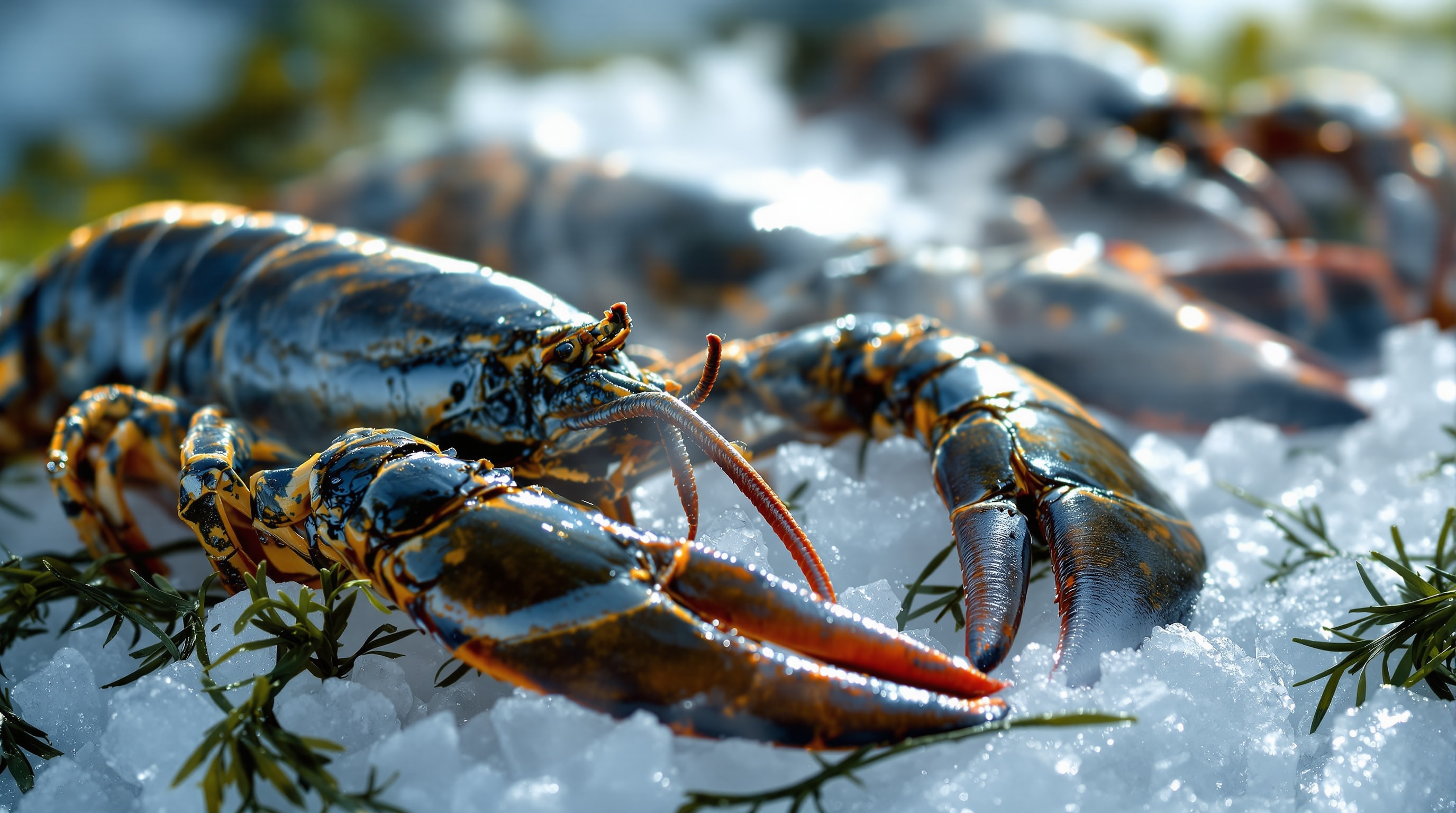
Lobster Sizes, Decoded
Lobster is sold by weight, and each size class has its own character at the table:
- Tender (about 1.25 lbs) — the classic single serving. Quick to cook, easy to handle, and the sweetest meat-to-effort ratio for a first-timer.
- Meaty (about 1.5 lbs) — the crowd favorite. Noticeably more claw and tail meat without a longer cook time penalty.
- Large (about 2 lbs) — a generous dinner for one or a splendid one to share alongside steamers and corn.
- Jumbo (3 to 9 lbs) — showpiece lobsters for a table that likes drama. The meat stays tender if you cook gently and do not rush.
- Giant (10 lbs and up) — rare, remarkable animals. Contrary to legend, a properly cooked big lobster is not tough; overcooking is what toughens lobster of any size.
Hard-Shell or New-Shell?
Lobsters grow by molting. A hard-shell lobster has lived in its shell long enough to fill it out — more meat per pound, and it travels well. A new-shell (soft-shell) lobster has recently molted; the shell is roomy and the meat is a touch sweeter and more tender, which is why many Mainers quietly prefer them in summer, when new-shells make up most of the catch. Read more about the molt cycle on our lobster facts page.
Choosing a Lively Lobster
A healthy lobster is an active lobster. Look for animals that move when handled, hold their claws up rather than letting them hang, and curl their tails underneath when lifted. Color tells you nothing about flavor — Maine lobsters run greenish-brown to black, and the occasional blue or yellow oddity cooks up exactly the same red. Black scuffs and marks on the shell are ordinary wear, not a defect.
Keeping Lobsters Until the Pot
Live lobsters should go into an open container in the refrigerator, covered with damp seaweed, damp newspaper or seawater-dampened towels. Never submerge them in fresh water — it kills them — and never seal them in an airtight container or on ice where melting fresh water collects. Kept cold with moist gills, a strong lobster will hold for up to 48 hours, though sooner is always better. Our Lobster Facts page answers the bathtub question once and for all.
Cooking, Briefly
Steam or boil in heavily salted water — about 10 minutes for the first pound and 3 or so for each additional pound — until the shell is uniformly red and an antenna pulls free easily. Serve with drawn butter, lemon, and not much else. A few habits separate the practiced from the hopeful: salt the water until it tastes like the sea (a quarter cup per gallon is not too much); never crowd the pot, because lobsters that can't circulate cook unevenly; and rest the cooked lobster two or three minutes before cracking so the juices settle into the meat instead of onto the newspaper. The claws and knuckles hide the sweetest meat — anyone who quits after the tail has paid full price for half the prize. For the full spread, see our recipe collection or graduate to a proper New England clambake. The Lobster Institute at the University of Maine is a wonderful rabbit hole for anyone who wants the science behind the sweetness.