New England Lobster Clambakes
New England clambakes make impressive memories and traditions — and they make unforgettable gifts of an evening, too. Quality Fresh Seafood offered Standard, Deluxe and Super Deluxe bakes, with a choice of lobsters from 1.25-pounders to 2.5-pound beauties, plus the famous Romance Clambake for two. This guide explains the bake itself: what goes in, why it works, and how to stage one anywhere.
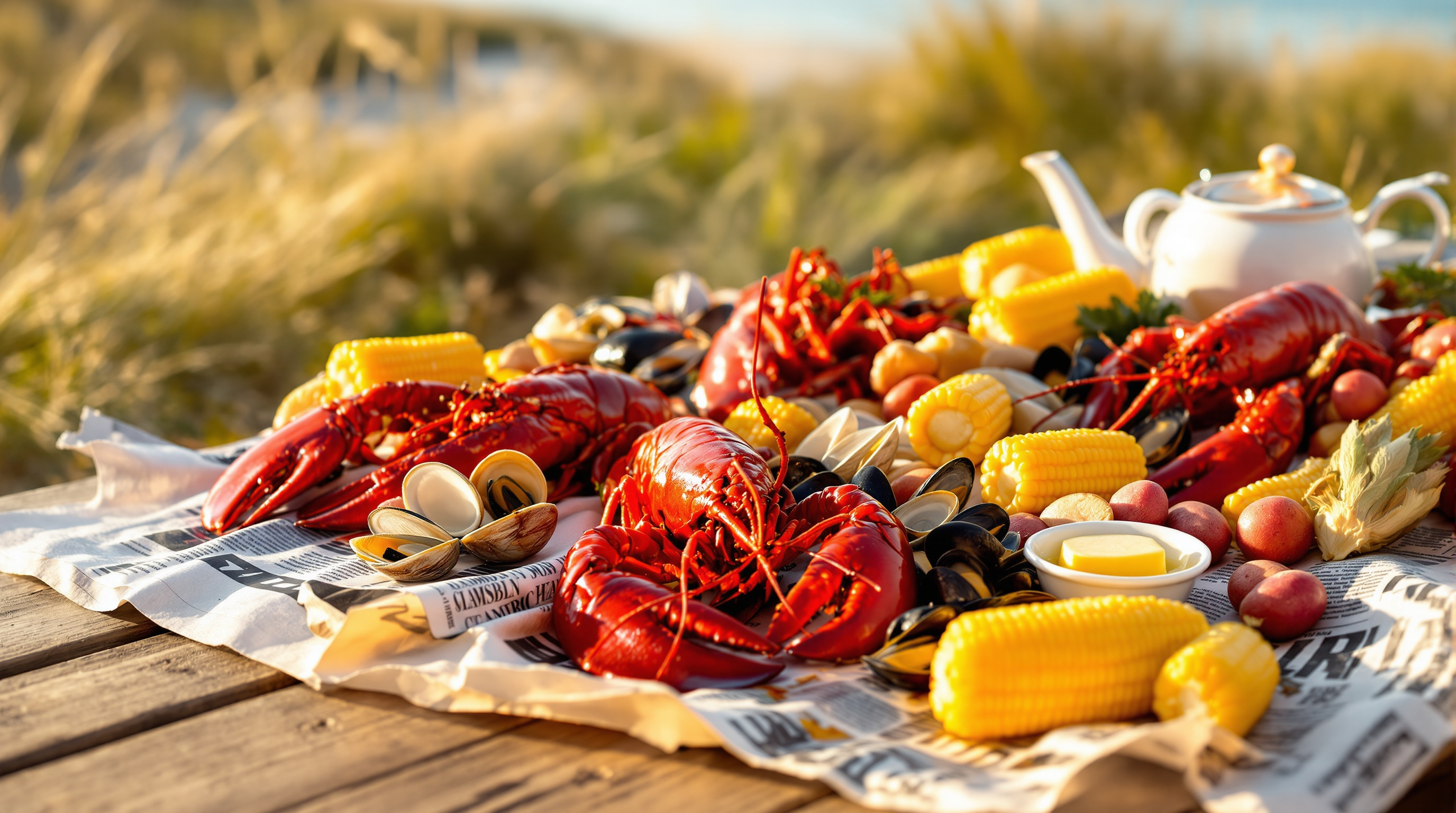
Anatomy of a Traditional Bake
A proper clambake for two centers on live Maine lobsters and builds outward in layers:
- Lobsters — one per person, traditionally 1.25 to 2.5 pounds each.
- Steamers — soft-shell clams by the quart, the bake's namesake (meet them on our clams page).
- Mussels — sweet, fast-cooking, and generous in number.
- Corn on the cob and red potatoes — the starch that drinks up the broth.
- Linguiça or chourico — the southeastern-Massachusetts touch many bakes swear by.
- Rockweed — fresh seaweed packed between layers; its pods pop and steam, carrying the flavor of the sea through everything.
The Beach Method
The ceremonial version is a day's work and worth every minute: dig a pit in the sand, line it with round stones, and burn a hardwood fire down over them for two to three hours. Rake out the embers, layer wet rockweed over the screaming-hot stones, then the food in mesh bags — potatoes and corn deepest, then lobsters, then clams and mussels — more rockweed, and a wet canvas tarp over all of it. The pit steams for about an hour; you will know it is done when a test potato yields and the clams gape open.
The Kitchen Method
An indoor bake trades romance for reliability and loses surprisingly little flavor. In your largest lidded pot, put two inches of seawater or heavily salted water and a layer of rockweed if you can get it. Build the same layers — potatoes and corn, then lobsters, then shellfish on top — cover tightly, and steam 25 to 35 minutes until the lobsters are uniformly red and the clams open wide. Pour the pot liquor into mugs; it is the cook's reward. Both methods, step by step, live in our Seafood Recipes section, alongside the chowders that traditionally open the meal.
Planning Quantities
The reliable arithmetic, per adult: one lobster, a pound of steamers, half a pound of mussels, an ear of corn, two or three small potatoes, and a cup of chowder to open. Appetites rise mysteriously near salt water, so the old house rule was to add one extra lobster per four guests — the testimonial letters suggest even that wasn't always enough. Everything except the lobsters can be prepped hours ahead; the bake itself demands nothing from the host but tending the fire and accepting compliments.
Making It an Occasion
The clambake's secret is participation. Newspaper on the table, crackers and picks for every guest, bibs without shame, drawn butter within everyone's reach, and blueberry pie waiting at the end. Anniversaries, graduations, reunions, or a Tuesday that deserves better — a bake turns dinner into an event in a way few meals can. For the lobster-picking part of the evening, our Lobster Facts page settles every claw-versus-tail debate before it starts.
A Tradition Older Than the Cookbook
The clambake predates every written New England recipe: coastal Wampanoag communities were steaming shellfish over hot stones and rockweed long before colonists arrived to learn the method. The nineteenth century turned it into civic theater — church bakes, political bakes, railroad-excursion bakes feeding hundreds from a single pit — and the family-scale version this page celebrates is the direct descendant of all of it. When the original business shipped its Standard and Deluxe bakes with everything down to the rockweed in the box, it was packaging four centuries of practice into a foam cooler — which is, in its way, the most New England thing imaginable.